 IMH Navigator
Common Responsibilities for All IMS Positions
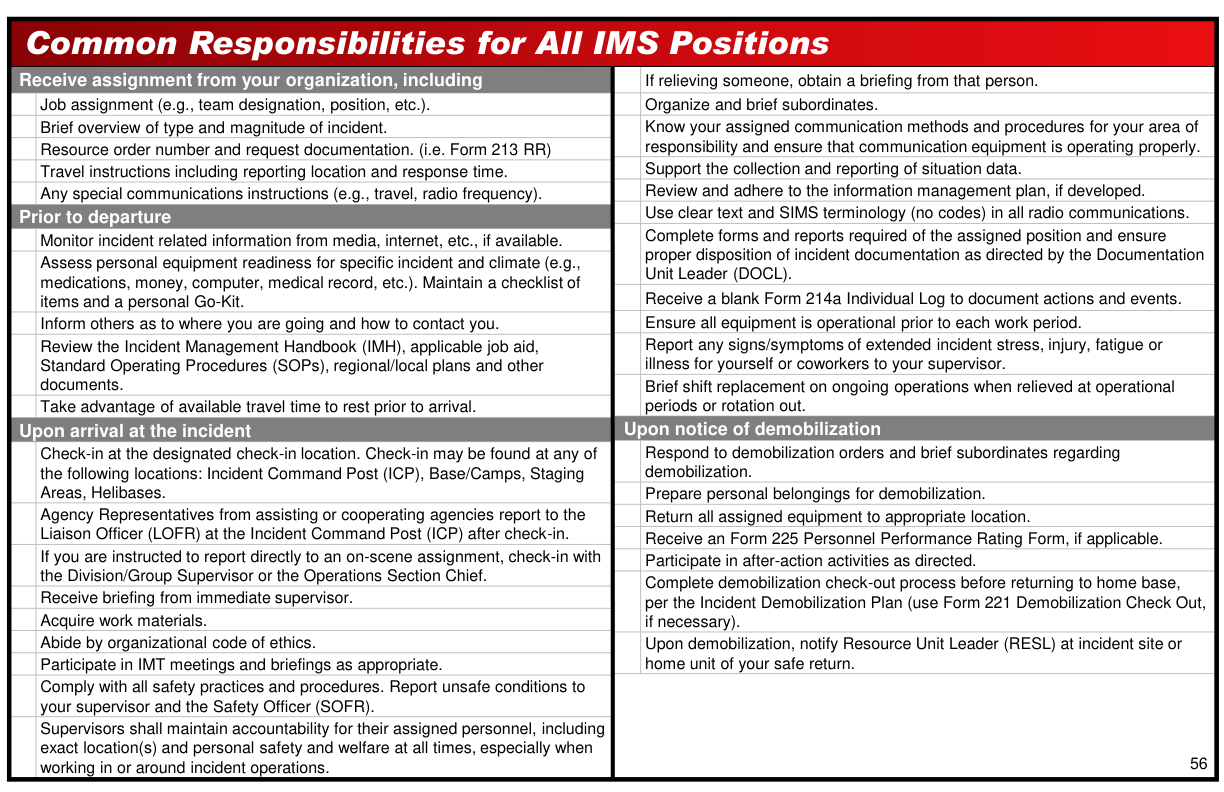
Receive assignment from your organization, including
Job assignment (e.g., team designation, position, etc.).
Brief overview of type and magnitude of incident.
Resource order number and request documentation. (i.e. Form 213 RR) Travel instructions including reporting location and response time.
Any special communications instructions (e.g., travel, radio frequency).
Prior to departure
Monitor incident related information from media, internet, etc., if available.
Assess personal equipment readiness for specific incident and climate (e.g., medications, money, computer, medical record, etc.). Maintain a checklist of items and a personal Go-Kit.
Inform others as to where you are going and how to contact you.
Review the Incident Management Handbook (IMH), applicable job aid, Standard Operating Procedures (SOPs), regional/local plans and other documents.
Take advantage of available travel time to rest prior to arrival.
Upon arrival at the incident
Check-in at the designated check-in location. Check-in may be found at any of the following locations: Incident Command Post (ICP), Base/Camps, Staging Areas, Helibases.
Agency Representatives from assisting or cooperating agencies report to the Liaison Officer (LOFR) at the Incident Command Post (ICP) after check-in.
If you are instructed to report directly to an on-scene assignment, check-in with the Division/Group Supervisor or the Operations Section Chief. Receive briefing from immediate supervisor.
Acquire work materials.
Abide by organizational code of ethics.
Participate in IMT meetings and briefings as appropriate.
Comply with all safety practices and procedures. Report unsafe conditions to your supervisor and the Safety Officer (SOFR).
Supervisors shall maintain accountability for their assigned personnel, including exact location(s) and personal safety and welfare at all times, especially when working in or around incident operations.
If relieving someone, obtain a briefing from that person.
Organize and brief subordinates.
Know your assigned communication methods and procedures for your area of responsibility and ensure that communication equipment is operating properly.
Support the collection and reporting of situation data.
Review and adhere to the information management plan, if developed. Use clear text and SIMS terminology (no codes) in all radio communications.
Complete forms and reports required of the assigned position and ensure proper disposition of incident documentation as directed by the Documentation Unit Leader (DOCL).
Receive a blank Form 214a Individual Log to document actions and events.
Ensure all equipment is operational prior to each work period.
Report any signs/symptoms of extended incident stress, injury, fatigue or illness for yourself or coworkers to your supervisor.
Brief shift replacement on ongoing operations when relieved at operational periods or rotation out.
Upon notice of demobilization
Respond to demobilization orders and brief subordinates regarding demobilization.
Prepare personal belongings for demobilization.
Return all assigned equipment to appropriate location.
Receive an Form 225 Personnel Performance Rating Form, if applicable. Participate in after-action activities as directed.
Complete demobilization check-out process before returning to home base, per the Incident Demobilization Plan (use Form 221 Demobilization Check Out, if necessary).
Upon demobilization, notify Resource Unit Leader (RESL) at incident site or home unit of your safe return.
| Handbook Page | 56 (PDF p.118) |
| Part | B — Incident Management |
| Section | 2.2 Common Responsibilities |
| Type | topic |